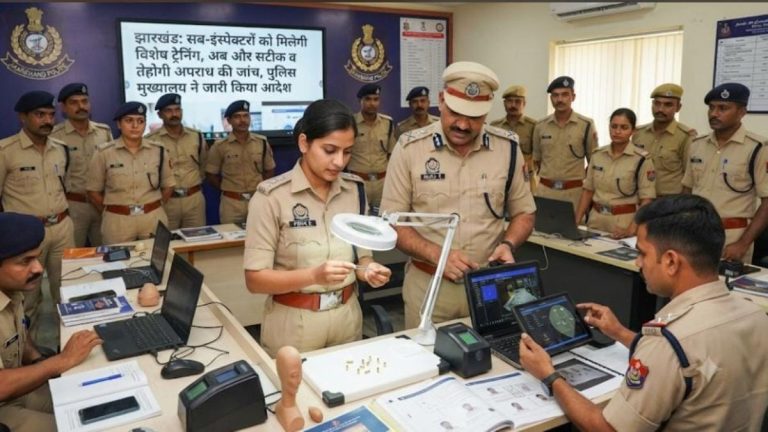
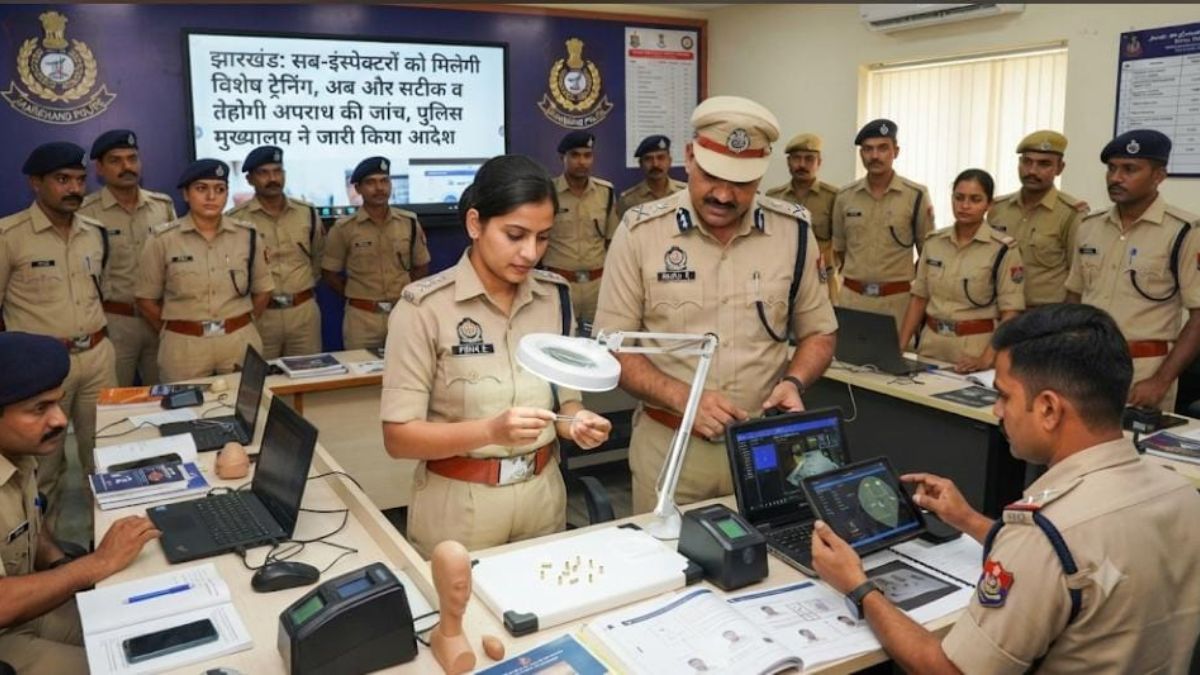
Jharkhand Police Headquarters Issues New Order for Five-Day Training Programme in Ranchi; Focus on Scientific Investigation, Cybercrime, Modern Criminal Methods and Faster Justice Through Hybrid Learning
RANCHI, JHARKHAND: In a significant step towards modernising the state’s policing and investigation system, Jharkhand Police Headquarters has announced a special training programme for police officers holding the rank of Sub-Inspector. The initiative aims to strengthen the investigative capabilities of officers and prepare them to deal with increasingly sophisticated criminal activities.
With criminal methods changing rapidly, traditional investigation techniques alone are no longer sufficient to address every challenge faced by law enforcement agencies. Criminals are increasingly using digital platforms, modern technology, and sophisticated methods to carry out illegal activities. Consequently, police officers need updated knowledge, technical skills, and a stronger understanding of modern investigative procedures.
Recognising these changing requirements, Jharkhand Police Headquarters has issued an order for a five-day specialised training programme focusing on advanced investigation techniques and modern crime investigation practices.
The training programme will be conducted from December 7 to December 11 at the Research Training School in Hotwar, Ranchi.
One of the most important features of the initiative is its hybrid learning arrangement. Sub-Inspectors will be able to participate either physically at the training centre or through online sessions facilitated by CCTNS offices in their respective districts.
The initiative is expected to contribute towards improving investigation quality, strengthening professional policing, and making the criminal justice process more efficient.
Jharkhand Police Headquarters Takes Major Step Towards Modern Investigation
The decision to organise specialised training for Sub-Inspectors reflects the growing importance of professional development within the police department.
Sub-Inspectors play an important role in the investigation of criminal cases. Their responsibilities frequently include examining complaints, coordinating investigative activities, collecting evidence, questioning relevant individuals, preparing case documentation, and ensuring that investigations follow applicable legal procedures.
The quality of an investigation often depends on the knowledge, experience, and professional skills of the officers handling it.
As criminal activities become increasingly complex, investigating officers must remain familiar with changing legal requirements, scientific evidence collection, digital investigation methods, and modern investigative practices.
Through this special training programme, Jharkhand Police aims to provide officers with updated knowledge that can help them perform their duties more effectively.
The initiative also highlights the department’s focus on building a more professional, accountable, and technology-oriented police force.
Five-Day Special Training Programme to Begin on December 7 in Ranchi
According to the information released by Jharkhand Police Headquarters, the specialised training programme will be organised over five consecutive days.
The programme will begin on December 7 and conclude on December 11.
The Research Training School, located in Hotwar, Ranchi, has been selected as the venue for the training.
The programme is designed to address important aspects of modern crime investigation and equip participating officers with practical knowledge relevant to their professional responsibilities.
Important Details of the Training Programme
Organising Authority: Jharkhand Police Headquarters.
Target Participants: Police officers holding the rank of Sub-Inspector.
Training Duration: Five days.
Starting Date: December 7.
Closing Date: December 11.
Venue: Research Training School, Hotwar, Ranchi.
Training Format: Hybrid mode.
Online Participation: Through CCTNS offices in different districts.
Main Objective: Improving investigation quality and strengthening modern crime investigation capabilities.
The programme is expected to help officers understand emerging challenges and adopt more effective approaches while investigating criminal cases.
Scientific Investigation to Receive Special Attention
One of the central focus areas of the training programme will be scientific and impartial investigation.
Scientific investigation plays an essential role in establishing facts and ensuring that criminal cases are handled according to proper legal and procedural standards.
An investigation must be based on reliable evidence rather than assumptions or incomplete information.
For this reason, police officers need to understand the importance of evidence preservation, accurate documentation, proper examination of crime scenes, and the use of appropriate scientific methods.
During the training, officers will receive guidance on maintaining the quality and integrity of investigations.
Important areas of attention are expected to include:
Understanding the importance of scientific evidence.
Following proper procedures during crime scene examination.
Maintaining the integrity of collected evidence.
Ensuring accurate investigation records.
Avoiding investigative errors and procedural shortcomings.
Maintaining impartiality throughout the investigation.
Following applicable legal requirements and professional standards.
Scientific methods can help investigators establish connections between available evidence and the circumstances of a crime.
They also reduce the possibility of mistakes that may affect the quality of a case.
By strengthening these skills, the training programme aims to improve the reliability and professionalism of investigations conducted by Jharkhand Police.
Cybercrime and Modern Criminal Activities Among Key Training Topics
The rapid expansion of digital technology has transformed the nature of criminal activities.
Cyber fraud, online financial scams, identity-related offences, digital impersonation, and other technology-enabled crimes have created new challenges for law enforcement agencies.
In many cases, criminals use digital platforms to target victims across geographical boundaries, making investigations more complicated.
Police officers must therefore understand the changing nature of cybercrime and the legal framework governing digital investigations.
The special training programme will focus on modern crimes and the legal aspects associated with them.
Why Cybercrime Training Is Becoming Increasingly Important
Cybercrime cases often involve digital information, electronic records, online transactions, and communication platforms.
Investigating such offences requires specialised knowledge and coordination with relevant technical authorities.
Officers must understand how digital evidence is handled and how applicable legal procedures should be followed.
The training is expected to strengthen awareness of:
Different forms of cybercrime.
Technology-enabled financial fraud.
Legal provisions related to cyber offences.
The importance of electronic evidence.
Proper documentation of digital information.
Coordination with specialised cybercrime units.
Challenges associated with modern online criminal activities.
Improved understanding of cybercrime can help officers respond more effectively to complaints and investigate technology-related offences.
This is particularly important as digital financial services and online communication become increasingly common in everyday life.
Better Investigation Quality Can Help Speed Up the Justice Process
The primary objective of any criminal investigation is to establish the facts of a case through lawful, fair, and reliable procedures.
Delays, incomplete documentation, weak evidence, and procedural mistakes can create difficulties during subsequent legal proceedings.
Improving the professional capabilities of investigating officers can help reduce such shortcomings.
The five-day training programme aims to improve investigation quality so that officers can handle cases with greater accuracy and efficiency.
Better investigation practices can contribute to:
More systematic examination of criminal cases.
Improved evidence collection and documentation.
Reduced procedural errors.
Better understanding of relevant legal provisions.
Stronger coordination between investigating authorities.
More efficient preparation of investigation records.
Improved support for the judicial process.
However, faster investigation must always go hand in hand with fairness, impartiality, and respect for the legal rights of everyone involved.
The ultimate objective is not simply to complete investigations quickly but to ensure that they are thorough, credible, and legally sound.
Hybrid Training Model to Benefit Officers Across Jharkhand
One of the most important features of the training programme is its hybrid format.
Jharkhand has police personnel posted across different districts, and bringing every participating officer to Ranchi may create logistical challenges.
To address this issue, the police department has arranged both offline and online participation.
Officers who can reach the Research Training School in Hotwar will attend the sessions physically.
Other Sub-Inspectors posted in different districts will be able to participate through online arrangements.
The CCTNS offices will facilitate access to the online training sessions by providing the necessary connection links.
This arrangement will allow officers to receive training without necessarily travelling to the state capital.
How the Hybrid Training System Will Work
The training programme will operate through two participation methods:
1. Offline Training in Ranchi
Officers who attend the Research Training School in Hotwar will participate directly in the training sessions.
Physical participation will provide opportunities for direct interaction, discussion, and learning from instructors.
2. Online Training Through District CCTNS Offices
Officers who are unable to travel to Ranchi will be able to join the programme online.
CCTNS offices in their respective districts will facilitate access through the designated links.
This arrangement is expected to make the training more accessible and help the department include officers posted in different parts of Jharkhand.
What Is CCTNS and Why Is It Important for Police Modernisation?
CCTNS stands for Crime and Criminal Tracking Network and Systems.
It is an important technology initiative designed to improve information management, coordination, and digital connectivity within India’s police system.
The platform supports the computerisation of police processes and facilitates the sharing of relevant information between connected police establishments.
Its broader objective is to strengthen technology-based policing and improve access to information required for law enforcement activities.
The use of CCTNS offices to facilitate online participation in the Jharkhand training programme demonstrates how existing technological infrastructure can support professional development.
Digital connectivity can make training arrangements more convenient, particularly for officers working in geographically distant districts.
It also reflects the growing role of technology in modern police administration.
Why Specialised Training for Sub-Inspectors Matters
Sub-Inspectors are among the important operational officers in the police hierarchy.
They frequently handle responsibilities directly connected with criminal investigations and police station activities.
Their work requires a combination of legal knowledge, investigative experience, communication skills, technical awareness, and professional judgement.
As new types of crimes emerge, continuous training becomes essential.
A well-trained investigating officer is better equipped to understand the nature of a complaint, identify relevant evidence, follow appropriate procedures, and prepare a comprehensive investigation record.
Specialised training can also help officers remain updated about changing legal requirements and technological developments.
The Jharkhand Police initiative is therefore significant because it focuses on strengthening the professional abilities of officers who play an important role in the day-to-day investigation of criminal cases.
Modern Policing Requires Technology, Training and Professional Accountability
The nature of policing has changed considerably over the years.
Traditional methods of investigation continue to remain important, but modern policing increasingly requires the use of scientific techniques, digital information, specialised knowledge, and coordinated institutional support.
Technology alone cannot guarantee an effective investigation.
It must be supported by trained personnel who understand how to use available resources responsibly and in accordance with the law.
Professional accountability is equally important.
Investigations must remain impartial, evidence-based, and respectful of individual rights.
The proposed training programme brings attention to these broader requirements by focusing on scientific investigation, cybercrime awareness, and modern investigative practices.
Such initiatives can help create a police system that is better prepared to respond to emerging challenges.
Benefits Expected from the Special Training Initiative
The five-day programme is expected to contribute to the professional development of participating Sub-Inspectors.
Its potential benefits include:
1. Improved Investigation Skills: Officers can strengthen their understanding of modern investigation procedures and scientific methods.
2. Better Cybercrime Awareness: Updated knowledge can help officers understand technology-related offences and their legal implications.
3. Greater Evidence Management Awareness: Proper evidence handling and documentation can improve the reliability of investigations.
4. Reduced Procedural Mistakes: Awareness of legal and investigative requirements can help minimise avoidable errors.
5. Wider Training Accessibility: The hybrid format can allow officers from different districts to participate.
6. Stronger Police Administration: Continuous professional development can contribute to a more capable and efficient police department.
7. Better Public Confidence: Fair, transparent, and professional investigations can help strengthen public trust in law enforcement institutions.
Jharkhand Police’s Move Towards a More Modern and Efficient Investigation System
The decision to provide specialised training to Sub-Inspectors is an important step in strengthening Jharkhand’s investigation system.
By focusing on scientific investigation, cybercrime, legal awareness, and modern criminal activities, the police department is addressing some of the major challenges faced by investigating officers today.
The five-day programme in Ranchi will also demonstrate how digital infrastructure can make professional training accessible to personnel posted across the state.
The hybrid arrangement is particularly significant because it reduces the need for every participating officer to travel to the state capital.
As criminal methods continue to evolve, regular training and technological awareness will remain essential for effective policing.
Conclusion: Special Training Expected to Strengthen Crime Investigation in Jharkhand
Jharkhand Police Headquarters’ decision to organise a five-day advanced investigation training programme for Sub-Inspectors marks an important development in the state’s police modernisation efforts.
Scheduled from December 7 to December 11 at the Research Training School in Hotwar, Ranchi, the programme will focus on scientific investigation, cybercrime, modern criminal methods, and the legal aspects of crime investigation.
The hybrid training arrangement will enable officers to participate either physically in Ranchi or online through CCTNS offices in their respective districts.
By strengthening the investigative knowledge and professional capabilities of Sub-Inspectors, the initiative aims to improve the quality of criminal investigations and support a more efficient justice process.
The programme reflects the growing recognition that modern policing requires continuous learning, technological awareness, scientific methods, and professional accountability.
If implemented effectively, this initiative could become an important contribution towards building a more capable, responsive, and technology-oriented police investigation system in Jharkhand.
About The Author