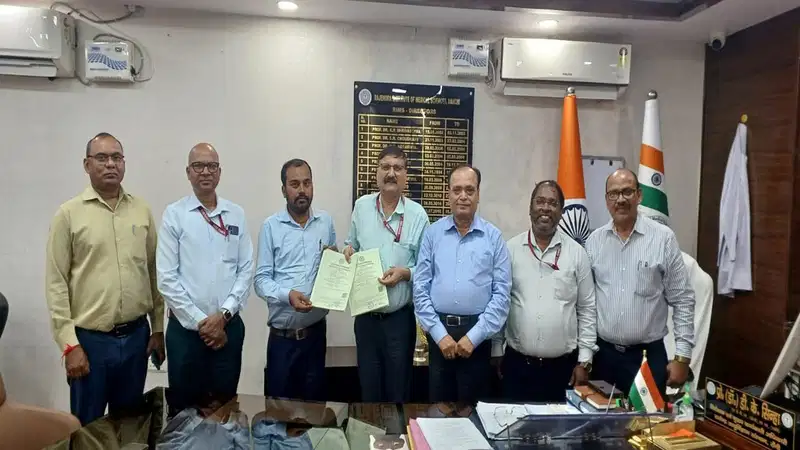
In a significant stride toward enhancing public amenities and overall hygiene within premier healthcare facilities, the Rajendra Institute of Medical Sciences has finalized arrangements to inaugurate an advanced ten-seat public sanitation complex for patients, their attendants, and visitors. To ensure seamless management, continuous cleanliness, and top-tier upkeep, the hospital administration has formally inked an operational partnership with the Pune-based social organization, Sewa Foundation. Strategically situated in close proximity to the old trauma center and the shelter home, the facility addresses a long-standing logistical challenge for hundreds of everyday commuters and families awaiting medical consultations.
The project represents a successful model of corporate social responsibility and collaborative governance. The construction of the modern sanitation block was made possible through financial backing from Coal India Limited, while the on-ground execution was carried out by the Sewa Foundation. Under the newly established terms of the agreement, the foundation assumes full accountability for continuous maintenance, daily cleaning routines, round-the-clock safety, and overall facility management. Crucially, this sustainable operational framework ensures that the public hospital incurs no additional financial burden or recurring expenditure.
To ensure long-term sustainability, standard upkeep, and pristine sanitation levels, the facility will function under a structured pay-and-use model. Patrons will be required to pay a modest, predetermined service fee to access the amenities, helping generate the funds necessary to preserve high levels of hygiene. Sewa Foundation remains contractually bound throughout the partnership period to maintain a pristine, secure, and user-friendly environment, preventing the rapid deterioration commonly observed in conventional free public utilities.
Hospital authorities view the initiative as a transformative step forward in campus hygiene management. Given the immense daily influx of patients and their family members traveling from distant districts, easily accessible and well-maintained sanitary facilities are essential to prevent health hazards and improve visitor comfort. Hospital officials emphasize that this well-appointed complex will offer substantial relief to patients, accompanying relatives, healthcare workers, and casual visitors alike, setting a practical benchmark for civic hygiene across premier government healthcare institutions.
About The Author