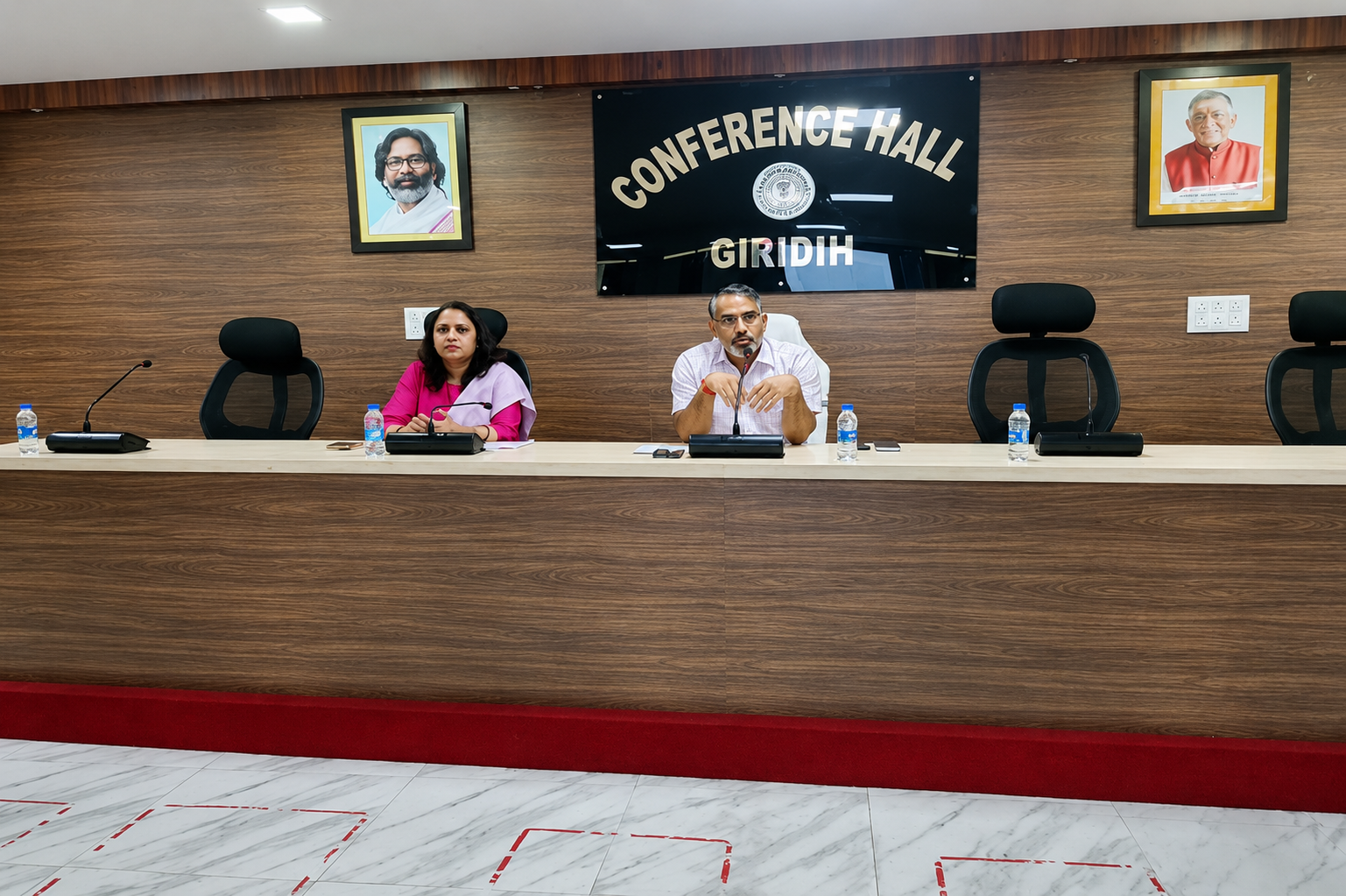
GIRIDIH: The ongoing Special Intensive Electoral Roll Revision Program 2026 has exposed a glaring administrative oversight and public apathy in Jharkhand’s Giridih district, where authorities have discovered that a staggering 122 polling booths have failed to attract even a single new voter registration application. The alarming reality came to light during a high-level review meeting convened at the Collectorate auditorium, headed by District Election Officer-cum-Deputy Commissioner Ramniwas Yadav, focusing extensively on the Gandey and Giridih assembly constituencies.
The comprehensive review session was called to evaluate the progress of claims, objections, and the processing of Form 6 and Form 8 applications collected between August 5 and August 31, 2026. While overall figures showed a combined total of 5,076 Form 6 applications submitted across both segments—with 2,225 originating from the Gandey assembly constituency and 2,851 from the Giridih assembly constituency—a granular booth-level analysis revealed deeply troubling discrepancies.
Administrative data presented during the meeting highlighted that out of 406 polling stations in the 31-Gandey assembly constituency, a remarkable 100 booths recorded zero Form 6 submissions. Similarly, within the 385 polling stations of the 32-Giridih assembly constituency, 22 booths reported absolute zero activity regarding new voter enrollments. Combined, exactly 122 polling booths across the two constituencies have remained completely dormant during the crucial registration window, prompting immediate concern from the district administration.
Addressing the assembled Booth Level Officers and supervisors, Deputy Commissioner Ramniwas Yadav took serious note of the lopsided performance and directed officials to launch an immediate, localized investigation into why these specific booths failed to generate any paperwork. He emphasized that building a robust, inclusive democracy requires active grassroots outreach, making it imperative for field agents to physically re-engage with local populations residing near zero-application booths.During the directives, the Deputy Commissioner placed absolute priority on identifying and registering young citizens who are on the verge of adulthood, explicitly targeting all eligible youth set to complete 18 years of age by October 1, 2026.
Officials were instructed to track down unregistered eligible citizens, newly married brides, recent migrants, and other overlooked demographics to ensure they are formally entered into the democratic framework without bureaucratic delays.Beyond fresh enrollments, the session heavily underscored the correction and purification of existing electoral data through Form 8 applications. Field workers were instructed to rigorously verify names, dates of birth, residential addresses, and photographs, ensuring that any discrepancies or shifts in residency are promptly addressed. Furthermore, all collected forms must be uploaded seamlessly via the designated BLO application in a time-bound manner to prevent processing backlogs.Concluding the review, the district administration warned that complacency would not be tolerated. The Deputy Commissioner mandated that low-performing and zero-application booths face heightened surveillance and active administrative intervention. With the overarching goal of delivering an entirely transparent, updated, and flawless electoral roll, the district machinery is racing against time to bridge these critical grassroots gaps before the final publication deadlines.
About The Author